Guide 01 · a five-layer scan
How to read a river edge
A river view becomes easier to understand when it is divided into working layers. The method below takes a few minutes and requires no species list.
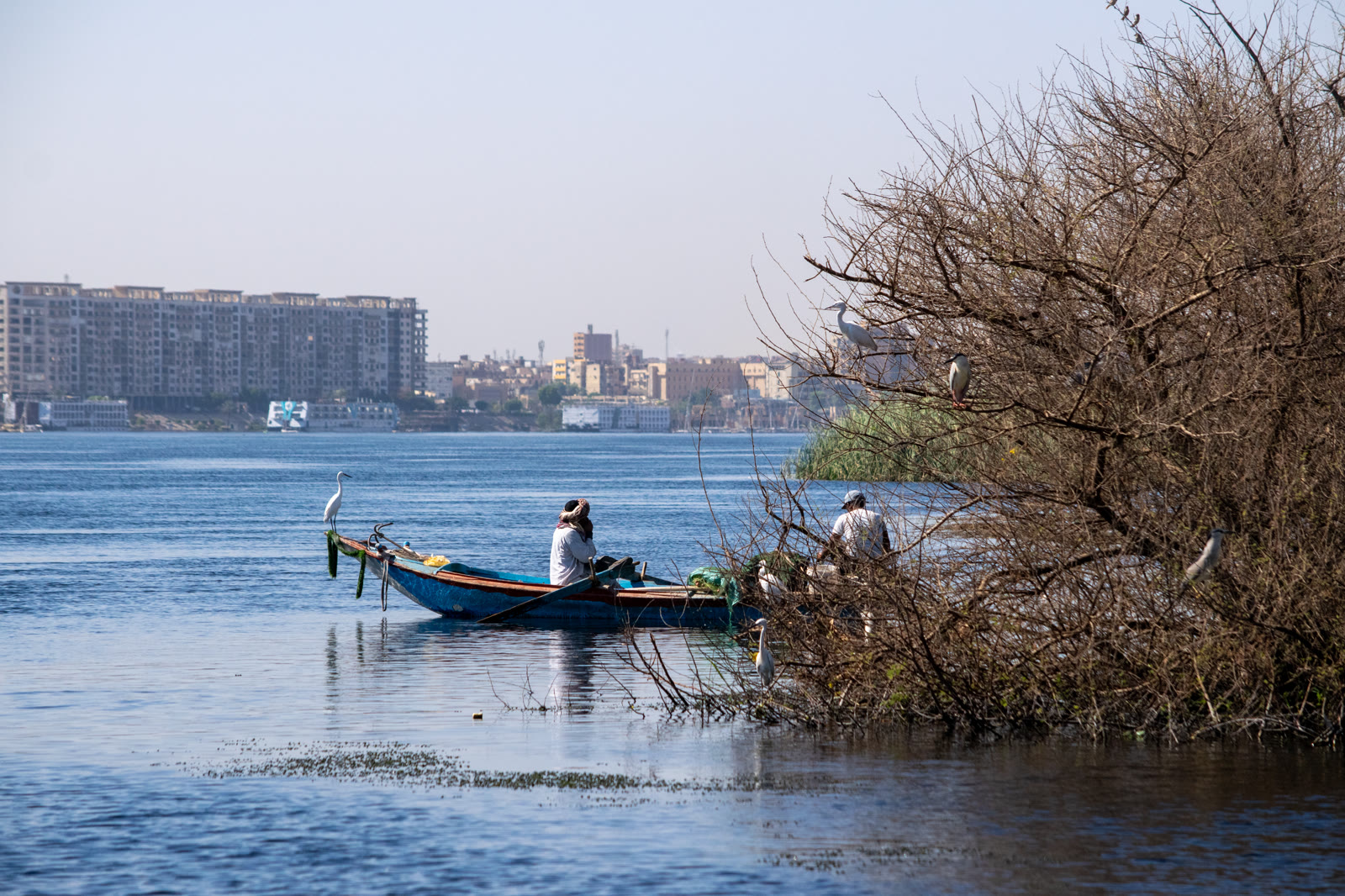

Choose a place where you can stand without blocking a path, approaching a nest or crowding a bank. Before using binoculars, mark the boundaries of the scene with your eyes. Where does fast water become calm? Where does stone become vegetation? Which objects cast shade? Birds respond to these transitions, not to the neat categories on a map.
1. Start above the water
Scan the sky and the line just above the river. Look for direct crossings, circling, low glides and hovering. Direction matters: a bird repeatedly travelling between the same two areas suggests a route, while one pass may be incidental. Do not swing optics toward the sun, and avoid following a bird toward a hidden nest or roost.
2. Read the open channel
Notice current seams, smooth patches, reflected glare and boat traffic. A diving bird and a surface-feeding bird use this space differently. Record whether a bird sits high or low in the water, dives completely, chases in flight or watches from above. The action is often identifiable before the species.
3. Trace the wet margin
The thin line where water meets mud, stone or plants is rich in small changes. Search it slowly from left to right. Long-legged birds may stand in shallows; smaller birds can disappear against debris or shadow. Estimate water depth by how much of the legs remains visible. A feeding bird that repeatedly returns to one pocket may be showing a local concentration of prey.
One-line habitat note
Write: bird + action + layer + edge condition. Example: “Small white heron walking quickly in ankle-deep water beside a shaded stone margin.” The sentence is useful even before a confident name.
4. Check the dry bank and cover
Move your gaze above the wet line. Short vegetation can hold grazing waterfowl, while reeds, shrubs, walls and moorings provide concealment or perches. Ask whether a bird has a clear route between cover and water. Keep that route open. If your position forces a bird to hesitate, step away.
5. Add the human layer
Boats, fishing, foot traffic, lighting and bank engineering shape the scene. Describe them without assuming either benefit or harm from a single moment. Is activity predictable or sudden? Are birds feeding beside it, merely tolerating it or moving away? This layer prevents the false impression that urban or working rivers are empty of ecological relationships.
Repeat from wide to narrow
After the first scan, choose one boundary and watch it for several minutes. Then repeat all five layers. The second pass often reveals movement missed during the first and shows whether an earlier observation was typical. A short timed scan is better than frantic searching because it gives absence some meaning: you looked systematically, not everywhere at once.
Add the basic conditions to the top of the page: light direction, wind, water appearance and the main source of nearby movement. These four details help explain why one layer was easier to read than another.
Finish with uncertainty intact. Weather, water level, season and disturbance can change what is visible, and one visit cannot describe the river permanently. Your field note should capture conditions, actions and spatial relationships. Names can be checked later; the structure of the scene cannot.