
The pied kingfisher’s pause
Why hovering, a heavy bill and a bold monochrome pattern make this riverside hunter readable at a distance.
Look slowly · read the river
A visual field journal for noticing birds along Egypt’s Nile: how they move, where they pause and what a river edge can reveal before a name is known.
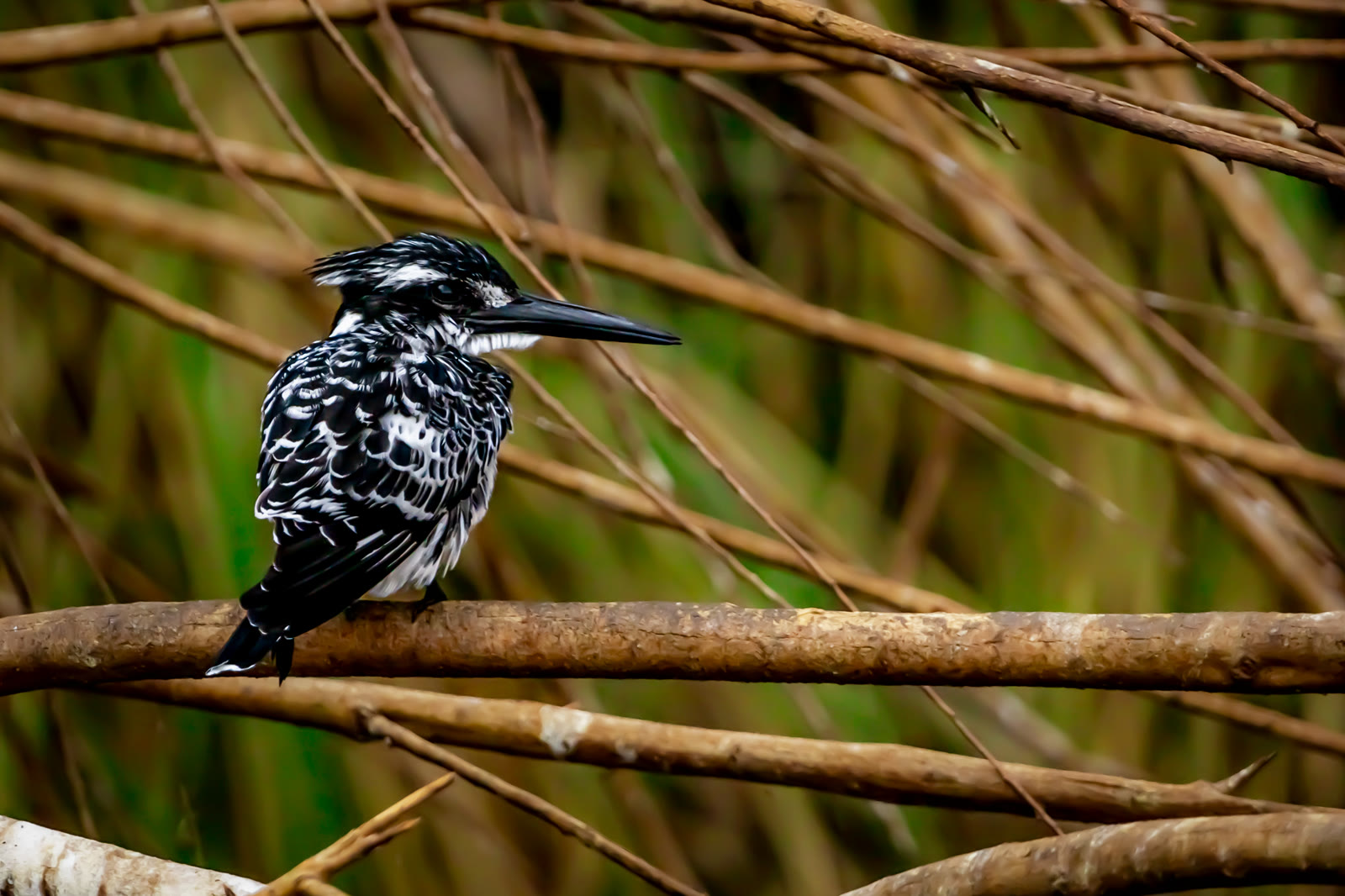
Pied kingfisher · black-and-white pattern · direct, hovering hunter
Four ways into the river
The journal begins with visible clues rather than a long checklist. A hovering kingfisher, a grazing goose, a patient heron and a crowded rocky islet each tell a different story about food, shelter and current.
Why hovering, a heavy bill and a bold monochrome pattern make this riverside hunter readable at a distance.

A warm-toned waterbird whose eye patch, upright stance and shore-feeding habits reward patient comparison.

Compare white egrets, grey herons and night herons through posture, pace and their chosen slice of water.

How rocks within the river give cormorants and herons a place to dry, scan, rest and negotiate space.
A usable field method
Let motion reveal the active parts of the scene. A fast crossing, a low glide or a sudden splash is often more useful than immediately raising binoculars.
Record size, silhouette, contrast, movement and the part of the habitat used. A plain description survives uncertainty and supports a later identification.
Keep distance, avoid playback and never push a resting or nesting bird for a closer photograph. An undisturbed bird shows more natural behaviour.

The journal’s position
Wingline Egypt is designed for curious readers, not competitive list-making. We separate what a photograph demonstrates from what must remain variable in the field.
Species presence, water levels and migration timing can change. Use these pages to build habits of attention, then check current local conditions and trusted conservation sources.
Read our approach